
Weekend Read: A World Without Work
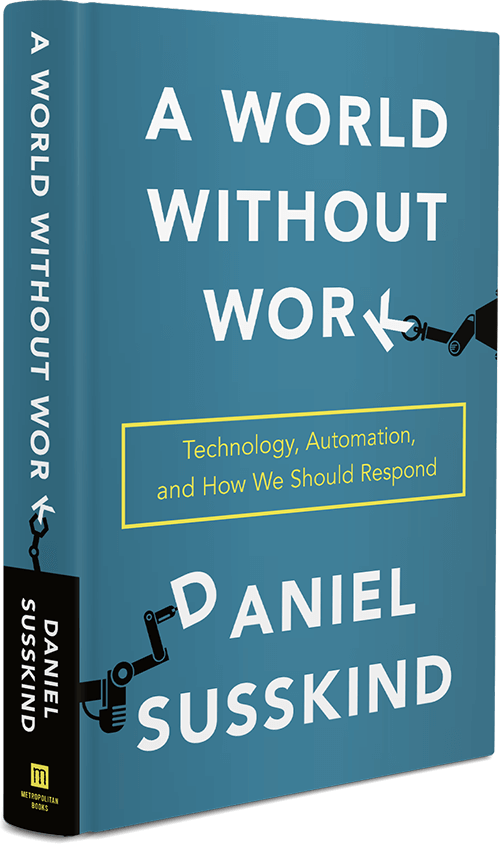
by Daniel Susskind

My #weekendread was “A World Without Work” by Daniel Susskind, and I came to it with a particular lens. I’ve been deep in my own book, The Collaborithmic Age, wrestling with these questions: what happens to human dignity when the economy simply can’t provide enough meaningful work for everyone who deserves it? Susskind, an Oxford economist, has done the research and explained his findings thoroughly in this excellent tome.
The book predates the modern AI era, and that’s where I had my first moment of hesitation. I’ve noted before that nonfiction can become obsolete surprisingly fast, and I was genuinely curious whether the arrival of LLMs and the pace we’re all living through now would make his framework feel quaint.
It also got me thinking about something I consider closely at Credtent: if credible books can lose their accuracy this quickly, what does that mean for the reliability of AI training data built on them? We are experts in valuation in this specific market, and this is a factor in our consideration when we help large media companies, rights holders, and data providers to appropriately price their content, for both AI training purposes as well as display rights in generative models.
Fortunately, the concern was mostly unfounded. Susskind doesn’t have the full picture of where the technological trajectory ended up, but the core argument holds.
The real challenge was never just whether AI takes jobs. It’s whether we’ve built the systems to share prosperity when it does. After all, we are already in an age of abundance, with so much economic value that everyone on the planet could be provided with universal basic services that provide them shelter, healthcare, sustenance, and something to do in the day.
And yet, we choose not to do that. We have something so deeply ingrained in us that people need to provide economic value to earn the right to those basic services.
Susskind’s solution, in brief, is a conditional basic service where individuals need to be providing some kind of pro-social value to society in order to obtain access to these necessities. That could include artistic contributions, like we’re already seeing in Ireland.
His research is rigorous, the urgency is well-earned, and the central question about rethinking incentives and how we value non-economic human pursuits remains as relevant as anything published last month. Recommended.
https://amzn.to/4dzPD1M
#weekendread #FutureOfWork #AI #Economics #TheCollaborithmicAge #Credtent #Books